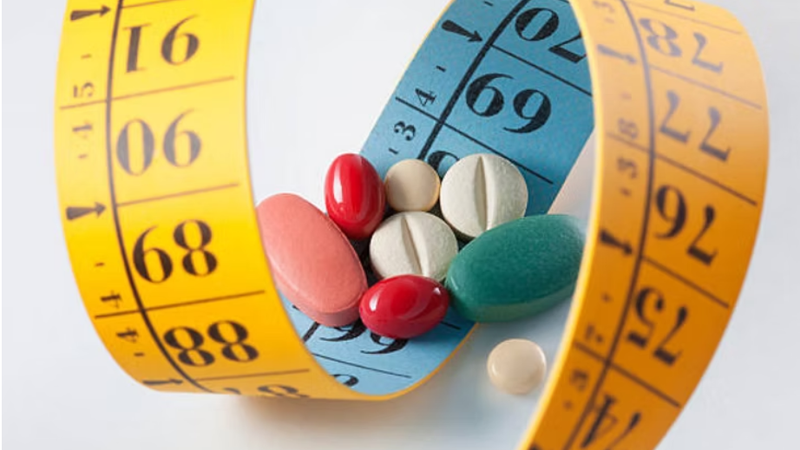
Regaining weight isn't a lack of willpower. Learn how your body's set point, hunger hormones, and GLP-1 medicines affect weight loss.

Medically reviewed by Michaela Mocanu, MD, DABOM — board-certified in obesity medicine, Main Line Kidney & Primary Care, Haverford, PA
Losing weight is hard. Keeping it off can be even harder. Many people work very hard to lose weight, only to see the pounds slowly come back.
If this has happened to you, it is not a lack of willpower. Your body has a built-in system that works to keep your weight the same. Doctors call this your weight "set point." The good news: there are proven ways to work with it.
What Is a Weight Set Point?
Your brain keeps your body temperature close to 98.6°F. In a similar way, it also tries to keep your weight in a certain range. That range is your set point.
Why does the body do this? For most of human history, food was often hard to find. Our ancestors survived because their bodies were good at storing fat and holding on to it. Your body still works this way today, even though food is now easy to get.
How Your Body Fights Weight Loss
Your body uses hormones to keep your weight steady. Hormones are chemical messengers. Think of them like delivery trucks: they carry messages through your blood from one part of the body to another.
- When you gain weight: Your fat sends messages to your brain that you have plenty of stored energy. Your brain responds by making you less hungry.
- When you lose weight: The opposite happens. Your brain gets the message that energy is running low. It makes you hungrier and slows down how many calories you burn. This pushes your weight back up toward your set point. [11]
Research shows these changes can last at least a year after weight loss. [6] That is why weight regain is so common. It is your biology, not just old habits.
Why Your Set Point Can Go Up Over Time
Today, many of us live with:
- Food available all the time, including highly processed foods
- Stress
- Not enough sleep
- Some medicines that can cause weight gain
Over many years, these can slowly push your set point higher. [7, 11]
The 3 Control Centers for Your Weight
1. Your Fat: Leptin and Adiponectin
Fat is not just stored calories. Fat cells are active. They make hormones that affect hunger, energy use, and inflammation.
- Leptin is a hormone made by fat. It tells your brain, "We have enough stored energy. You can stop eating." It is your body's natural appetite control. When you lose fat, leptin levels drop, so you feel hungrier.
- Adiponectin is another hormone made by fat. It helps control inflammation and how your body uses energy. Unhealthy levels are linked to type 2 diabetes, heart disease, high blood pressure, and fatty liver.
2. Your Stomach and Gut: Ghrelin and GLP-1
- Ghrelin is the "hunger hormone." Your stomach releases it when it is empty. It tells your brain, "Time to eat." After weight loss, ghrelin levels go up, so you feel hungrier.
- GLP-1 is released by your gut after you eat. It helps your body release insulin to control blood sugar. It also tells your brain, "You've had enough." This helps you feel full.
Other gut hormones, such as GIP and amylin, also help control hunger and blood sugar.
3. Your Brain: The Main Control Center
Think of your brain as a main train station. Messages from your fat, your gut, and the world around you all arrive here. Your brain then decides how hungry you feel and how much energy you burn.
Your brain also has a reward system that uses a "feel-good" chemical called dopamine. Eating tasty food makes you feel good. This helped our ancestors survive. Some studies suggest the reward system may work differently in people with obesity, which could make food cravings stronger. [11]
Can You Change Your Set Point?
Your set point is controlled by many things. Not all of them are in your control. When you lose weight, your body burns fewer calories and your appetite goes up. This is your body trying to get back to its old weight.
You may have heard that losing weight slowly helps your body "accept" a new weight. This makes sense, but there is not enough research yet to prove it. [7]
What Helps You Keep Weight Off
Healthy Habits
People who keep weight off over the long term tend to:
- Stay physically active on a regular basis
- Eat a healthy diet
- Weigh themselves often
These habits help you notice small changes early and act on them. [7, 8]
GLP-1 Weight Loss Medicines
Some newer medicines copy your body's natural fullness hormones. They can help you lose weight and keep it off. Examples include:
- Semaglutide (Wegovy): copies GLP-1
- Tirzepatide (Zepbound): copies both GLP-1 and GIP [1, 2, 4, 10]
These medicines also have other health benefits. For example, semaglutide lowers the risk of heart attack and stroke in some people with heart disease. [9]
What Happens If You Stop Wegovy or Other GLP-1 Medicines?
In a large study, people took semaglutide for about 5 months and lost about 11% of their weight. Then some kept taking it and some switched to a placebo (a fake shot) for almost a year:
- People who kept taking it lost about 8% more of their body weight.
- People who stopped gained back about 7% of their body weight. [3]
Another study found people who stopped semaglutide regained about two-thirds of the weight they had lost within a year. [5]
This tells us that obesity is a long-term (chronic) condition. Like high blood pressure or diabetes, it often needs long-term treatment. Stopping treatment usually lets the body drift back toward its old set point.
Key Takeaways
- Your set point is a survival system that fights to keep your weight the same.
- It explains why keeping weight off is so hard, and why some people seem to stay at a healthy weight without trying.
- Regaining weight is not a personal failure. It is biology.
- Healthy eating, regular activity, and checking your weight can help.
- Medicines are now available that can help you reach and keep a healthier weight.
The science is still growing. Talk with your doctor about which options are right for you.
Medical Weight Loss on the Main Line
At Main Line Kidney & Primary Care in Haverford, PA, Dr. Michaela Mocanu, a board-certified obesity medicine physician, uses a set-point biology approach to weight loss. We look at your hormones, health conditions, and medicines, then build a long-term plan that may include lifestyle support and GLP-1 medication management. We see patients from Haverford, Ardmore, Wayne, King of Prussia, and across the Main Line, with telemedicine visits available.
Ready to talk about your weight? Schedule an appointment or call (610) 510-7152. Learn more about our Medical Weight Loss program and pricing.
Frequently Asked Questions
Why do I regain weight after dieting? When you lose weight, your body lowers leptin, raises the hunger hormone ghrelin, and burns fewer calories. These changes push your weight back toward your set point and can last at least a year.
Can you lower your weight set point? Not all the factors that control your set point are in your control. Regular activity, a healthy diet, frequent weigh-ins, and medicines such as GLP-1 drugs can help you keep a lower weight.
Will I gain weight back if I stop Wegovy or Zepbound? Most people regain some weight. In one study, people who stopped semaglutide regained about two-thirds of the weight they had lost within a year. Talk with your doctor before stopping any medicine.
Is weight regain my fault? No. Weight regain is driven by biology, not a lack of willpower. Obesity is a chronic condition that often needs long-term treatment, like high blood pressure or diabetes.
References
- Abbasi J. FDA green-lights tirzepatide, marketed as Zepbound, for chronic weight management. JAMA. 2023. https://jamanetwork.com/journals/jama/fullarticle/10.1001/jama.2023.24539
- Shang W, Hui X, Li M, et al. Pharmacological treatments for adults with overweight and obesity without diabetes. Cochrane Database Syst Rev. 2024. https://www.cochranelibrary.com/cdsr/doi/10.1002/14651858.CD015861/full
- Rubino D, Abrahamsson N, Davies M, et al. Effect of continued weekly subcutaneous semaglutide vs placebo on weight loss maintenance in adults with overweight or obesity: the STEP 4 randomized clinical trial. JAMA. 2021. https://jamanetwork.com/journals/jama/fullarticle/10.1001/jama.2021.3224
- Bracchiglione J, Meza N, Franco JVA, et al. Semaglutide for adults living with obesity. Cochrane Database Syst Rev. 2025. https://www.cochranelibrary.com/cdsr/doi/10.1002/14651858.CD015092.pub2/full
- Wilding JPH, Batterham RL, Davies M, et al. Weight regain and cardiometabolic effects after withdrawal of semaglutide: the STEP 1 trial extension. Diabetes Obes Metab. 2022. https://doi.org/10.1111/dom.14725
- Sumithran P, Prendergast LA, Delbridge E, et al. Long-term persistence of hormonal adaptations to weight loss. N Engl J Med. 2011. https://doi.org/10.1056/NEJMoa1105816
- Apovian CM, Aronne L, Barenbaum SR, et al. Clinical Management of Obesity. 3rd ed. The Obesity Society; 2025. https://books.pcimed.com/pdfs/download/obesity
- Swift DL, Ross LM, Laddu DR, et al. Role of physical activity in obesity treatment and cardiometabolic health: a scientific statement from the American Heart Association. Circulation. 2026. https://www.ahajournals.org/doi/10.1161/CIR.0000000000001441
- Saeed ZI, Apovian CM. Semaglutide and tirzepatide for the treatment of obesity and weight-related comorbidities: a narrative review. Curr Atheroscler Rep. 2025. https://doi.org/10.1007/s11883-025-01369-w
- Bergmann NC, Davies MJ, Lingvay I, Knop FK. Semaglutide for the treatment of overweight and obesity: a review. Diabetes Obes Metab. 2023. https://doi.org/10.1111/dom.14863
- van Baak MA, Mariman ECM. Obesity-induced and weight-loss-induced physiological factors affecting weight regain. Nat Rev Endocrinol. 2023. https://doi.org/10.1038/s41574-023-00887-4
This article is for general education and is not medical advice.
Explore Topics
Written by
Dr. Michaela Mocanu, MD, CHS, DABOM
Board-certified in Internal Medicine, Hypertension, and Obesity Medicine. Dr. Mocanu specializes in hypertension, kidney health, and weight management at her practice in Haverford, PA.